

Room Rentals vs Traditional Rentals: Why More People Are Making the Switch
Why Room Rentals Are Growing Faster Than Traditional Rentals
Download iROOMit #1 Roommate finder & room rental app
The rental housing market is undergoing one of its biggest transformations in decades. Across North America and around the world, room rentals are growing significantly faster than traditional apartment rentals, changing how people think about housing, affordability, and community.
What was once viewed as a temporary solution for students has evolved into a mainstream housing choice for professionals, remote workers, newcomers, entrepreneurs, and even retirees. Rising rental prices, changing lifestyles, and advancements in technology are all contributing to the rapid growth of shared living.
At the center of this shift is a new generation of rental technology platforms, led by iROOMit, which combines artificial intelligence, advanced roommate matching, and secure rental tools to make finding a room or roommate easier than ever before.
The growth of room rentals isn't simply a trend—it's a reflection of how modern renters are adapting to economic realities and embracing more flexible ways of living.
The Economics Behind the Shift
Housing affordability remains one of the biggest challenges facing renters today.
In many major cities, the cost of renting a one-bedroom apartment has increased faster than wage growth. Whether it's Toronto, Vancouver, New York, Los Angeles, Chicago, London, or countless other urban centers, renters are feeling the pressure of rising housing costs.
For many individuals, spending 40% to 60% of their monthly income on housing is no longer sustainable.
This reality has led people to explore alternatives that allow them to maintain a desirable lifestyle without sacrificing financial stability.
Room rentals offer a practical solution.
Instead of shouldering the full cost of rent, utilities, internet, and other household expenses alone, renters can share these costs with roommates. The result is significant monthly savings while still providing access to desirable neighborhoods, transportation networks, entertainment districts, and employment opportunities.
For many renters, room rentals are not a compromise—they're a strategic financial decision.
Flexibility Is Becoming a Priority
The traditional rental model was built around stability and long-term commitments. Renters would sign a lease, stay in one location for years, and gradually establish roots.
Today's workforce looks very different.
Remote work, freelance careers, contract positions, hybrid employment, and increased mobility have created a generation of renters who value flexibility as much as affordability.
People change jobs more frequently. They relocate more often. Many work from different cities throughout the year. Some travel while working remotely.
As lifestyles become more dynamic, housing needs are evolving as well.
Room rentals often provide:
- Lower move-in costs
- Flexible lease options
- Furnished accommodations
- Short-term rental opportunities
- Faster approval processes
These benefits appeal to a growing segment of renters who prefer housing solutions that adapt to their lives rather than the other way around.
Shared Living Is No Longer Just About Saving Money
One of the most interesting developments in the room rental market is the growing importance of community.
Historically, people chose roommates primarily to reduce expenses. While affordability remains a major factor, today's renters are increasingly seeking social connection and compatible living environments.
Living alone can be isolating, particularly for individuals moving to a new city, starting a new job, or transitioning into a different stage of life.
Shared housing creates opportunities for:
- Building friendships
- Expanding professional networks
- Reducing loneliness
- Sharing experiences
- Creating supportive living environments
The rise of co-living communities and roommate-focused housing reflects a broader societal shift toward connection and collaboration.
Many renters now prioritize finding the right roommate just as much as finding the right property.
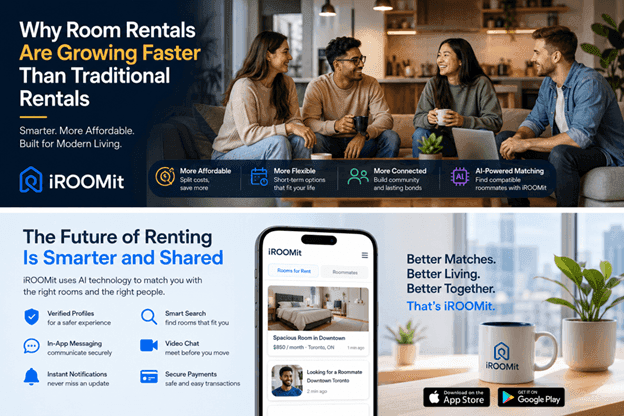
Technology Has Changed Everything
Perhaps the biggest factor accelerating the growth of room rental app is technology.
A decade ago, finding a roommate was often an uncertain process.
People relied on classified ads, local bulletin boards, Facebook groups, or word-of-mouth recommendations. While these methods occasionally worked, they also introduced significant risks.
Renters frequently encountered:
- Incomplete information
- Limited screening options
- Fraudulent listings
- Compatibility issues
- Communication challenges
Modern rental technology has fundamentally transformed this experience.
Today's renters expect digital platforms that deliver the same convenience they experience when booking travel, ordering food, or managing finances online.
They want:
- Mobile-first experiences
- Verified profiles
- Secure messaging
- Instant notifications
- Smart recommendations
- Identity verification
- Digital payments
Technology has removed many of the barriers that once made room rentals feel uncertain or risky.
Why AI Is Becoming Essential in Roommate Matching
Finding a room for rent is relatively simple.
Finding the right roommate is far more complex. Many roommate conflicts arise not because people are bad tenants, but because their lifestyles are incompatible.
Differences in sleep schedules, cleanliness standards, social habits, work routines, guests, pets, and communication styles can quickly create tension.
This is where artificial intelligence is changing the game.
Instead of matching people based solely on location and budget, AI-powered platforms can evaluate dozens of lifestyle variables to identify stronger roommate compatibility.
The result is a more personalized housing experience that focuses on long-term success rather than simply filling vacancies.
As AI continues to evolve, roommate matching is becoming increasingly sophisticated, helping renters make more informed decisions before they move in together.
How iROOMit Is Leading the Next Generation of Room Rentals
As room rentals become more mainstream, technology platforms must evolve beyond simple listing websites.
This is where iROOMit has established itself as an industry leader.
Rather than functioning solely as a room listing marketplace, iROOMit was designed to solve one of the biggest challenges in shared housing: compatibility.
Using advanced AI-driven technology, iROOMit helps renters find rooms and roommates that align with their lifestyle preferences, habits, and expectations.
The platform's intelligent matching system considers factors such as:
- Daily routines
- Work schedules
- Lifestyle preferences
- Cleanliness expectations
- Social habits
- Pet preferences
- Living priorities
This creates a significantly more personalized matching experience compared to traditional rental platforms.
Instead of simply finding available rooms, users can identify living arrangements that have a higher likelihood of long-term success.
Trust and Verification Matter More Than Ever
Trust has become one of the most valuable currencies in the digital rental market.
With the growth of online transactions comes increased concern about scams, fake listings, and identity fraud.
Modern renters want confidence that the people they interact with are genuine and that the properties they view are legitimate.
Platforms that prioritize verification and transparency are gaining a competitive advantage because they address one of the biggest pain points in the rental journey.
iROOMit has invested heavily in verification tools and security-focused features designed to help create a safer rental environment for both renters and property owners.
As room rentals continue growing, trust will become an increasingly important differentiator among rental platforms.
Benefits for Property Owners and Landlords
The growth of room rentals is not only benefiting renters.
Property owners are discovering that room-by-room rental strategies can create new opportunities for maximizing occupancy and increasing revenue.
Instead of renting an entire property to a single tenant, landlords can often generate higher overall returns by renting individual rooms.
Additional advantages may include:
- Broader tenant demand
- Reduced vacancy risk
- Greater pricing flexibility
- Improved occupancy rates
- Faster leasing cycles
Technology platforms now make managing room rentals far more efficient than in the past, helping landlords connect with qualified renters while streamlining communication and tenant screening.
The Influence of Younger Generations
Millennials and Generation Z are playing a major role in reshaping the rental landscape.
These generations tend to prioritize flexibility, mobility, and experiences over traditional ownership models.
They are also highly comfortable using technology to manage nearly every aspect of their lives.
Whether booking accommodations, finding transportation, managing finances, or searching for housing, digital convenience is expected—not optional.
As a result, younger renters are naturally drawn toward platforms that provide seamless mobile experiences and intelligent matching capabilities.
The room rental industry aligns closely with these preferences, offering affordability and flexibility without sacrificing convenience.
The Future of Housing Is More Collaborative
Looking ahead, the growth of room rentals appears likely to continue.
Several long-term trends support this outlook:
- Ongoing housing affordability challenges
- Urban population growth
- Increased workforce mobility
- Expansion of remote work
- Growing demand for flexible housing
- Advances in artificial intelligence
The traditional model of renting an entire apartment independently will remain important, but it will increasingly coexist alongside shared living arrangements that offer greater affordability and adaptability.
Housing is becoming less about square footage and more about lifestyle fit.
People are looking for living environments that support their goals, values, and daily routines.
Technology platforms that can successfully connect people with compatible housing opportunities will play a central role in shaping the future of the rental market.
Final Thoughts
Room rentals are growing faster than traditional rentals because they address the realities of modern life.
They provide affordability in expensive housing markets. They offer flexibility in a rapidly changing workforce. They create opportunities for community in an increasingly digital world.
Most importantly, advances in technology have made room rentals more accessible, secure, and personalized than ever before.
Companies like iROOMit are helping drive this evolution by leveraging artificial intelligence, verification systems, mobile technology, and intelligent roommate matching to create a better rental experience for everyone involved.
As renters continue prioritizing flexibility, affordability, and compatibility, room rentals are poised to become one of the defining housing solutions of the next decade.
Frequently Asked Questions
Why are room rentals growing faster than traditional rentals?
Room rentals offer lower housing costs, greater flexibility, and access to desirable locations, making them increasingly attractive to modern renters facing rising rental prices.
Are room rentals only for students?
No. While students remain a major user group, room rentals are increasingly popular among professionals, remote workers, newcomers, digital nomads, and retirees.
How does AI improve roommate matching?
AI analyzes lifestyle preferences and behavioral patterns to identify compatible roommates, reducing the likelihood of conflicts and improving overall living experiences.
What makes iROOMit different from traditional rental websites?
iROOMit combines room listings with AI-powered roommate matching, verification tools, secure communication features, and mobile technology to create a more comprehensive rental experience.
Is shared living expected to continue growing?
Yes. Housing experts expect room rentals and co-living arrangements to continue expanding due to affordability challenges, changing work patterns, and increasing demand for flexible housing options.
Is room rental a good option in expensive cities?
For many renters, room rentals provide an effective way to access high-demand neighborhoods while keeping housing expenses manageable.